


These are the famous Sampietrini cobblestones, characteristic basalt blocks made of solidified lava, originating from the quarries left by the Lazio volcanoes and found in particular in the Laghetto quarry near Monte Compatri, just outside Rome.
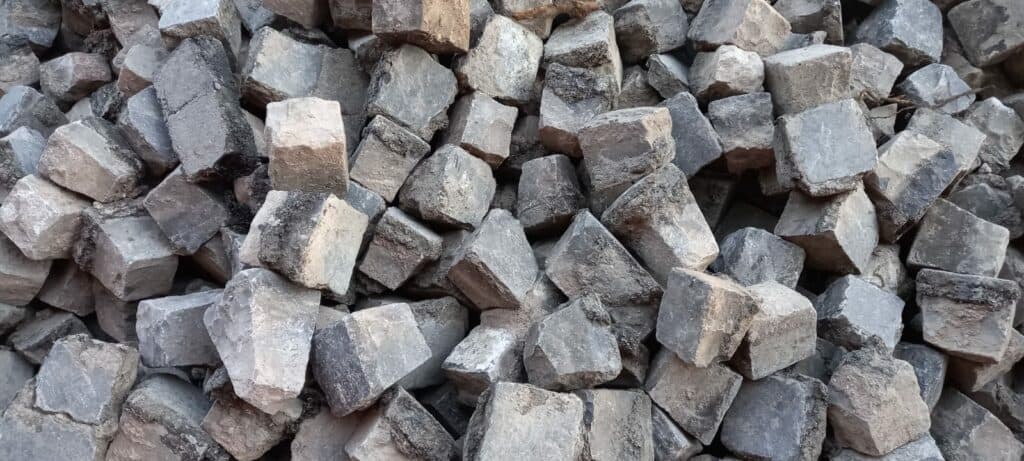
The history of the Sampietrini stones
Two thousand years ago the Romans paved their streets with large basalt flagstones and used the same material for a type of wall structure known as cubilia or opus reticulatum (where blocks are laid in diamond formation resembling a net). Later, well after the fall of Rome and the medieval period, this material albeit in a smaller form was adopted once again in the sixteenth century during the pontificate of Pope Sixtus V.
The striking name comes from the fact that in 1725 Saint Peters Square was repaved using a smaller size of these original Roman paving stones. At one stage, Pope Benedict XII’s carriage, while passing in front of the Basilica, almost overturned due to the irregular potholes in the square. To avoid further mishaps, Monsignor Ludovico Sergardi, in charge of Vatican infrastructure at that time, decided to have the square paved with these little black cubes, which immediately became known as the ‘little stones of St Peter’.
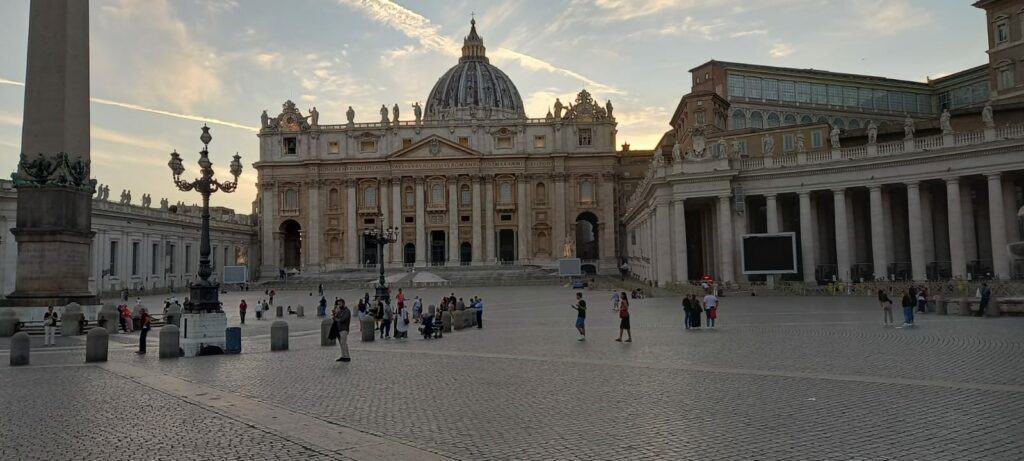

In the 1730s Pope Clement XII proceeded to have many streets in the Holy City paved with these little Sampietrini blocks. Soon the popularity of this paving system spread throughout the towns around Rome and in the Papal States and then to all of Italy and even Europe.
Sampietrini old and new
After 1870, when the Italians arrived in Rome, and with the ensuing building frenzy in the newly appointed capital, the request for these blocks exploded, and in December 1890 the Cooperative of the Selciaroli (Stonecutters) of Alfedena was founded in Monte Compatri (RM). Alfedena is a small town in the Abruzzo region famous for its masons, who came to help with the quarrying and cutting of the Sampietrini.
These little blocks were then placed on a bed of sand or natural pozzalana and driven in dry with iron rods by hand. I have met elderly people who worked on these cobblestones for many years and they have told me about the tremendous vibrations in their hands produced by the hammers on the rock. In a famous popular song, they list these blocks, known colloquially as ‘serci’, as potential throwing weapons. A block of lava stone 12x12x6 weighing several kilos if thrown with force could in fact cause great damage to people and things. These cobblestones have become very famous and visitors are fascinated by them. In fact their form has inspired both jewellers and ice cream makers alike.
Nowadays they are no longer being produced and their cost is high as they have antique value. One piece is worth between 10 and 25 €. When they are removed from the streets they should be numbered and preserved by the competent authorities.
I am very happy to have researched this topic which I believe is one of the most fascinating for all those who love this city.
